
[Case Study] From checking individual shipping line websites to updating schedules in about 15 minutes. GENERAL Inc. improves information sharing with overseas sales companies using MonCargo

MonCargo Official
GENERAL Inc., a global company in the air conditioning business
GENERAL Inc., which will celebrate its 90th anniversary in 2026, operates globally with a focus on air conditioning products.
In its air conditioning business, GENERAL Inc. manages production and shipment plans while coordinating with overseas sales companies and taking into account sales and inventory conditions in each region. As demand fluctuates by region, accurately understanding shipping schedules after factory shipment and sharing them with overseas sales companies is an essential part of daily operations that supports planning accuracy.
For this interview, we spoke with Mr. Hiromichi Takagi and Mr. Kazuhiko Watanabe of the Logistics Promotion Division, Production Unit, and Mr.Koide of Digital Innovation Promotion, Digital Promotion Group, at GENERAL Inc. They shared their perspectives from both business operations and system implementation on the background and impact of introducing MonCargo.
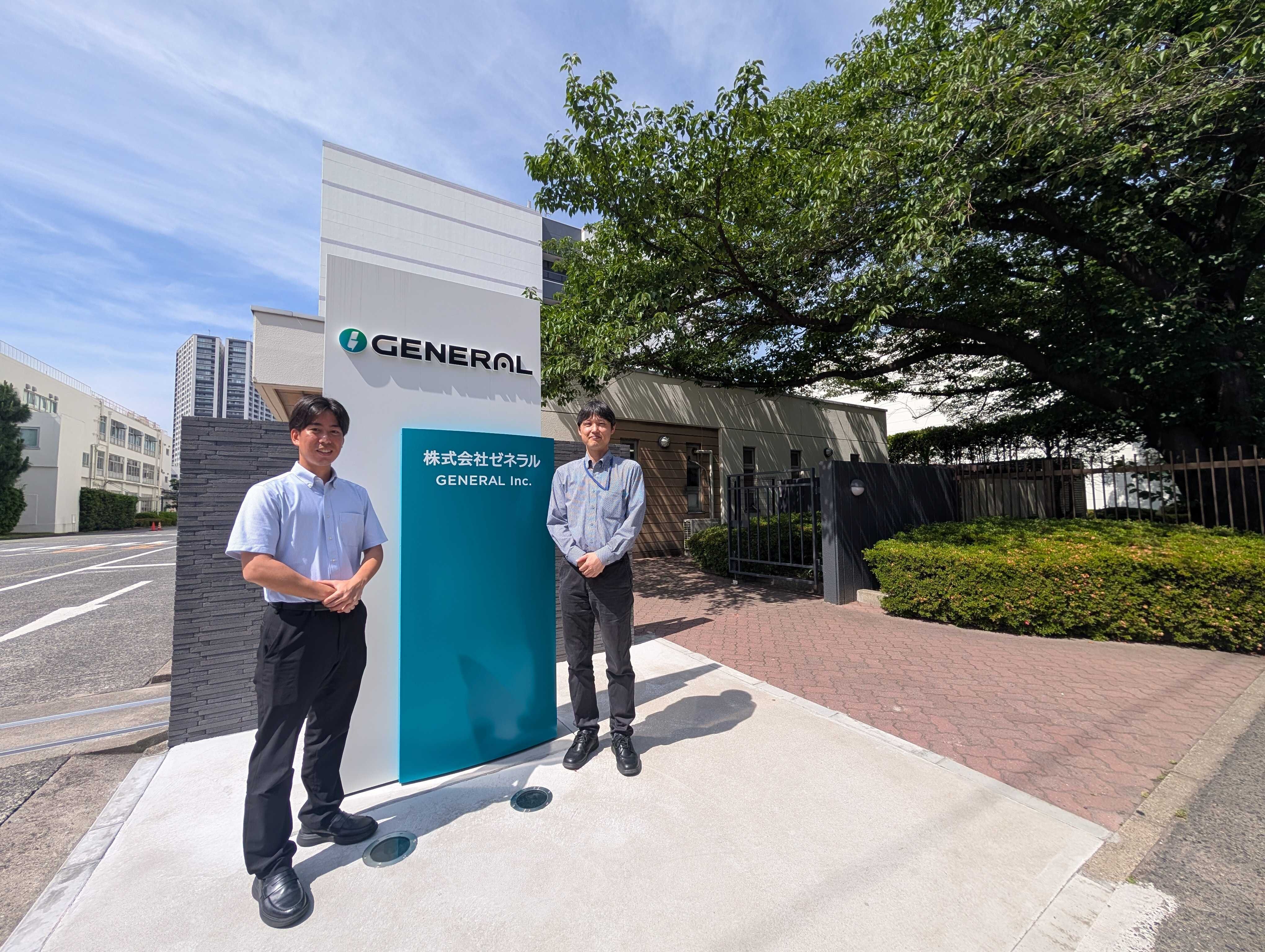
From left: Mr. Hiromichi Takagi and Mr. Kazuhiko Watanabe, Logistics Promotion Division, Production Unit
Article summary
Objective
To visualize ETD (Estimated Time of Departure) and ETA (Estimated Time of Arrival) for overseas sales companies and improve the efficiency of sharing shipping schedules.
Challenges before adoption
- It was difficult to understand vessel delays after factory shipment, making it hard to share accurate schedules with overseas sales companies
- Vessel movements had to be checked separately for each shipping line, and shipping plans were updated in Excel
- For each inquiry, it was necessary to trace the relevant product model, container, and B/L (Bill of Lading) to confirm the transportation status
- Transportation information was scattered across multiple shipping lines, requiring time to check and share
Results after adoption
- Schedule update work was reduced from approximately one hour to about 15 minutes
- MonCargo data was integrated with the company’s internal system, creating an environment where overseas sales companies can more easily check transportation status
- Inquiries from overseas sales companies decreased because local teams could check the information themselves
- In addition to ETD and ETA, transshipment information can now be checked, making it easier to explain the basis for schedules
- Even in cases such as stockouts or transportation delays, it became easier to move from status confirmation to the next action
Difficulty sharing timely schedules with overseas sales companies because vessel delays after factory shipment were hard to see
First, could you tell us about your responsibilities?
Mr. Takagi:
I am mainly responsible for supply and demand coordination, optimizing production and shipment volumes based on sales and inventory conditions in the European region.
This involves checking sales and inventory conditions in each region and finalizing monthly production and shipment volumes according to each situation. It is important to carefully investigate local sales performance and inventory conditions, and to create optimal procurement, sales, and inventory plans.
Before introducing MonCargo, how did you check shipping schedules?
Mr. Takagi:
We often share monthly shipment status with each sales company. For this, we created a schedule called a “shipping plan,” which included detailed transportation status for shipments, and shared it in Excel.
Previously, we had to update shipment schedules by B/L (Bill of Lading), checking each shipping line’s tracking site one by one. When there were many shipments, it took about one hour just to update all transportation schedules.
Each inquiry required tracing the product model, container, and B/L
What kind of checks were required when responding to inquiries from overseas sales companies?
Mr. Takagi:
Local sales companies sometimes inquire about the transportation status of products.
Before introducing MonCargo, depending on the inquiry, we first had to identify the relevant product model, check which container that model was loaded in, and then trace the B/L to confirm the vessel movement on the shipping line’s website or other sources. Because the information was spread across multiple places, it tended to take a long time not only to find the information, but also to respond to the sales company.
Schedule checking cut from one hour to 15 minutes
How are you using MonCargo?
Mr. Takagi:
Since introducing MonCargo, once we register the B/L, we can check the schedules for all shipments on a single screen. Previously, we had to access each shipping line’s tracking site individually, but now we can check everything together on one screen, which has significantly reduced the workload involved in updating schedules.
The number of shipments varies by month, but schedule checking and updates used to take about one hour. After introducing MonCargo, the same work can now be completed in about 15 minutes.
Integrating with the company’s internal system to centrally manage transportation status and enable overseas sales companies to check information
How do you share information with overseas sales companies?
Mr. Takagi:
In our daily operations, we integrate MonCargo data into our internal system and link transportation status with various data in that system, so everything can be checked on a single screen. Local sales companies can also check transportation status by viewing that screen.
Previously, whenever we received an inquiry from a local sales company, the head office had to check the status, manage the information in Excel, and respond. Now that the information is linked in the system, I feel there are far fewer situations where we need to check and reply each time.
Of course, inquiries have not disappeared completely, but being able to let all relevant parties check the same information has made status sharing much easier.
A simple design focused on just the functions needed, implemented in a short time
What was the deciding factor in introducing MonCargo?
Mr.Koide:
Before implementation, we had the challenge of wanting to visualize ETD and ETA for overseas sales companies.
Our internal system already managed information related to product models and shipments, but we needed an efficient mechanism to check and integrate information such as ETD and ETA, and link it to that data.
Before introducing MonCargo, we compared several services. However, rather than introducing a new logistics tool with many functions, our priority was being able to properly integrate the necessary shipping schedule information into our existing operations and internal system.
In that respect, MonCargo was highly evaluated because it could be used with a focus on the functions we needed, specifically checking ETD and ETA.
In addition to improving operational efficiency, the fact that we were able to introduce it in a short period was also a deciding factor. Its simple design makes it easy to understand after using it once or twice, and we felt that not requiring much time for implementation or training made it easy for the team to use in daily operations.
Visibility into transshipment makes schedules even easier to grasp
When checking transportation schedules, what aspects do you find easy to use?
Mr. Takagi:
In addition to the scheduled departure date and time and the final estimated arrival date and time, we can also check the ETD and ETA for each vessel involved in transshipment.
Rather than simply showing ETD and ETA, being able to understand the overall flow of transportation makes it possible to share information in a way that feels more convincing.
Mr. Watanabe:
In actual operations, when transportation delays occur, they may be caused by connections at transshipment ports or transfers to the next vessel. It is helpful to see when transshipment will take place and how the final ETA changes as a result.
Easier to move to the next action when trouble strikes
In what situations do you particularly feel the impact of MonCargo?
Mr. Takagi:
Of course, the time required to check shipment status in regular operations has been greatly reduced. But I feel the impact is especially significant when handling irregular situations, such as stockouts or transportation delays on the sales company side.
Problem handling requires even greater speed than regular operations. When we receive an inquiry, being able to check the current schedule more quickly and smoothly share information with the customers further down the chain allows us to move faster to the next action, such as adjusting delivery dates.
As a result, I feel this also contributes to improving customer satisfaction.
Mr. Watanabe:
Beyond the overseas sales companies, there are many different customers, including wholesalers, installers, and air conditioning installation companies. Inquiries about transportation status may come from those local customers, then reach the Japanese head office through the sales company.
Because there are many parties and stakeholders involved, I feel MonCargo is also an effective tool for preventing gaps in understanding among stakeholders and helping everyone maintain a shared understanding.
Looking ahead to expansion into other regions
Could you tell us about your future plans?
Mr. Takagi:
Currently, we are using the system in certain regions, but in the future, we would like to introduce the tracking system in other regions as well and provide transportation status to each region and each sales company.
Some regions handle large volumes, and the number of B/Ls also increases. If we can provide detailed information to those regions as well, it would be extremely helpful from a sales perspective.
We hope to expand the system to more regions going forward.
Featured company
GENERAL Inc.

3-3-17 Suenaga, Takatsu-ku, Kawasaki-shi, Kanagawa 213-8502, Japan
https://www.generalww.com/jp/index.html
A comment from MonCargo
For this case study, we had the opportunity to speak with GENERAL Inc.
We are very pleased that by integrating MonCargo with their internal system, we have been able to contribute to improving operational efficiency in checking vessel movements and sharing information with overseas sales companies. What left a particularly strong impression was that MonCargo is being used not only to streamline daily checking tasks, but also as a foundation that supports information sharing with overseas sales companies and next actions when transportation delays occur.
For companies that already use internal systems, this interview also reminded us of the importance of being able to naturally incorporate the necessary shipping schedule information into existing workflows and systems.
Through this conversation, we at MonCargo will continue striving to remain a practical service rooted in real operations and one that can be naturally integrated into day-to-day work.
Mr. Takagi, Mr. Watanabe, and Mr. Koide, thank you for sharing your valuable insights.
Note: This page is provided as a reference translation. The Japanese version is the original.